

Fighting Ebola in the DRC
We are operating Ebola Treatment Centers in Bunia and Nyankunde. Will you prayerfully consider joining us?
Is God Calling You?
Samaritan's Purse is recruiting staff for our Ebola response in the Democratic Republic of the Congo (DRC). Learn more about this response below as you prayerfully consider joining the work to help Congolese Ebola patients.
The greatest shortages are on our nursing and WASH teams.
We need medical and non-medical specialists, including physicians, nurses, WASH experts, logisticians, and other non-medical support staff. Each role is carefully vetted and absolutely essential to the operation.
Take the Next Step
Register for our Ebola/IPC training, August 24–28 in North Wilkesboro, North Carolina, for medical and WASH personnel.
Take the Next Step August 24–28, 2026
Ebola-Specific TrainingAlready Trained?
Update AvailabilityPPE and Serving in Jesus' Name Q&A with Dr. Andy Lephard
Dr. Andy Lephard, a family doctor in England, talks honestly about the blessings and challenges of treating Ebola patients in the Democratic Republic of the Congo during this 2026 outbreak.
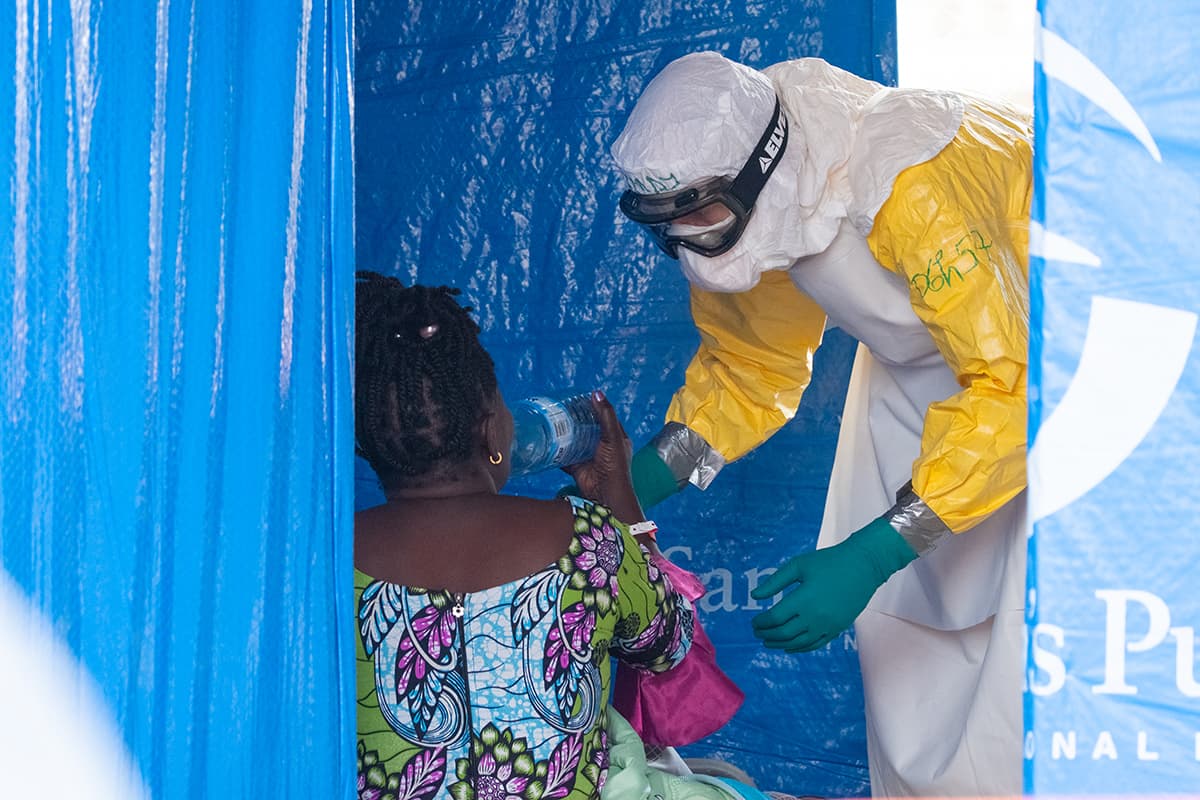
Dr. Andy Lephard joined the first Samaritan’s Purse Disaster Assistance Response Team (DART) in Ituri Province. He has served as a family physician for more than two decades in England.
This response was his third deployment with our DART and his first time treating Ebola patients. In the interview below, Dr. Lephard details his experiences during a three-week stint at our Ebola Treatment Center in Bunia.
What made you want to join this response?
I've worked in French-speaking Africa in the past, so I already felt something of a connection, and many of my patients in the UK are refugees from eastern DRC. They are quite amazing people, full of faith, who've told me just how difficult it's been over there for decades. Many have been uprooted from their homes and had to flee. Eastern DRC is somewhere a lot of the suffering has gone relatively unreported. And now to face Ebola on top of that? This response just felt very important to me.
How did this response shape your faith?
This response was the one where my faith in Jesus and my hope in the resurrection were most crucial to the work. Jesus is the resurrection and the life. That is a future hope, and it also offers hope in the present as we treat people whose bodies are damaged by Ebola. I was praying and believing that God could miraculously restore each patient we treated, and we saw Him heal many of them.
There were many times in the hot zone when I was just overwhelmed by this sense of the sacred in our work, knowing God was hearing our prayers. I really don't think I could have gone with a secular organization.
Was it safe?
There is a risk here. You can't deny that. But I felt I was in very safe hands. We are very well trained in how to use PPE (personal protective equipment), and while I didn't feel like anyone was trying to scare the living daylights out of me, there was an appropriate level of seriousness.
What did your family say?
I have three boys who I think felt very proud of me. They understand why I'd want to do this. My wife kind of understands how my brain works and why I might be crazy enough to want to do this kind of thing. They had a veto, especially my wife, but she told me, “It's OK. You should go.”
What does a day in the Ebola Treatment Center look like?
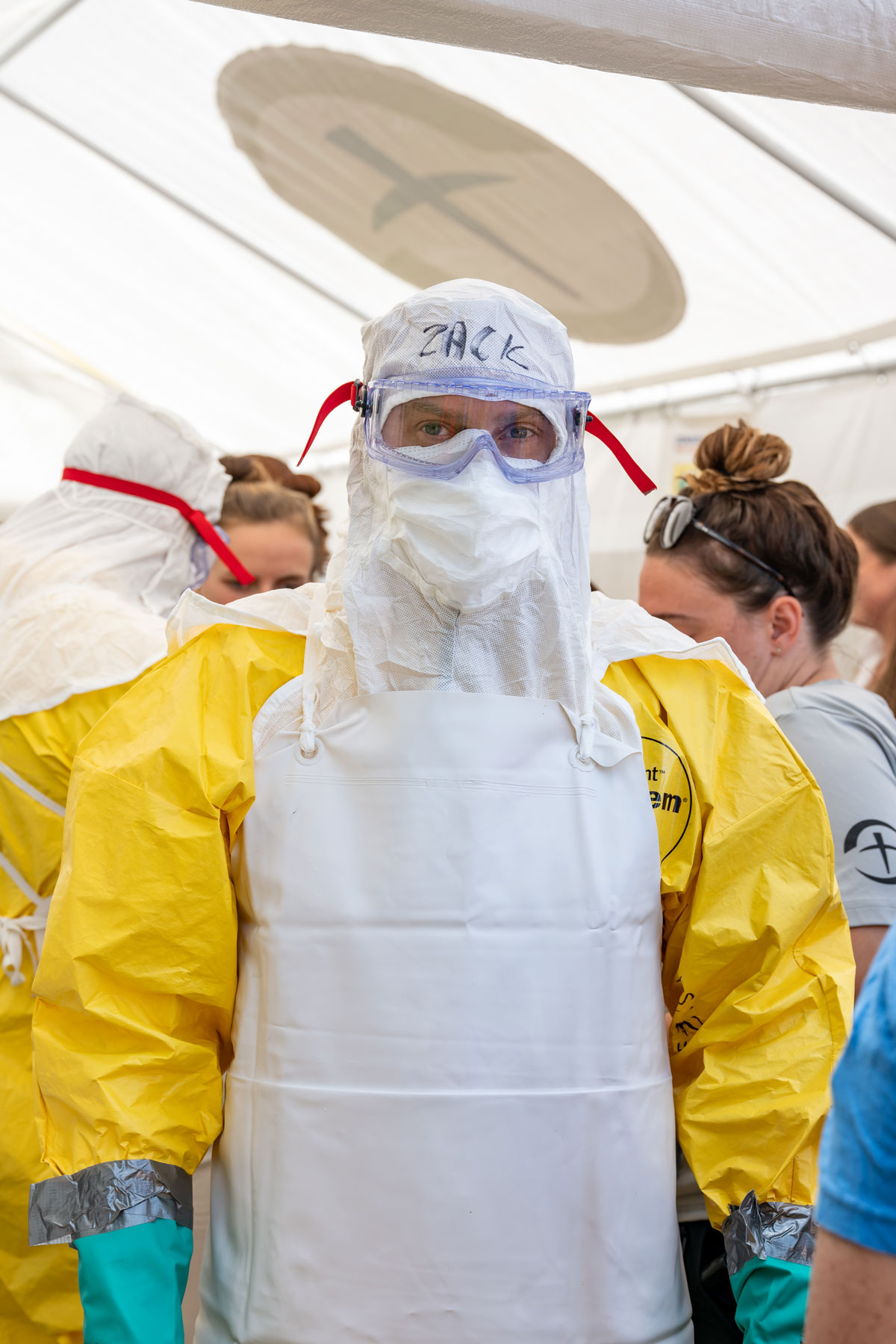
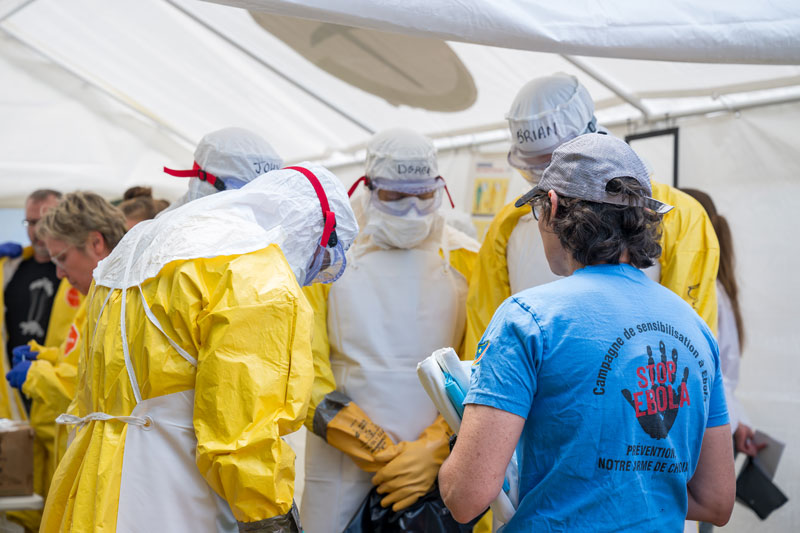
You have a donning area where you're putting on all your layers of PPE with people there to make sure there’s not any skin showing by accident.
In the hot zone you have a spotter on the other side of the fence with a written list of the jobs that need doing. They might say, “Now go in room four, turn the IV on.” or “Put up a new fluid.” Or, “Now go into room seven and check that this person is OK. Are they conscious?”
We'd always go in pairs for safety, always checking on our buddy: “How are you feeling? Are you managing?” Usually I'd know I needed to come out because my mask would get so saturated with sweat that I'd start finding it hard to breathe.
Then out through the doffing area, we’d take off all the layers in a clear, prescribed order. There are 30 or 40 steps and someone telling us each one. “Take this off. Now wash your hands. Now take this pair of gloves off. Wash your hands again.” They're there to keep you safe.
I thought the PPE would be a huge barrier to connecting with patients, but somehow it wasn't. They could still recognize me somehow, partly because I was speaking French—with probably a bad accent.
What would you say to someone considering this Ebola response?
It's not easy. I had to think about my own health and my own risk. I thought about my family and my obligations to them. But it was an opportunity to serve in a difficult place with a team of incredibly professional people.
More than anything, I just needed to know whether this was something God wanted me to do. After conversations with my family and time with God, I came away convinced that this response is so important, and such a privilege, that I did really want to be part of it.
I couldn't tell somebody else how to make that decision. But I think just to come openly before God and say, “What would You have me do? Is it possible that the skills and the abilities You've given me are for this?” God had really prepared me for this, over a number of years and in lots of different things I've done.
I don't think there's anywhere else I'd have rather been.
Frequently Asked Questions: Realities and Privileges of Serving on the Ebola Response
For more than a decade, Samaritan's Purse has been responding to outbreaks of infectious diseases, including cholera, COVID-19, diphtheria, and the Ebola virus. Our previous responses have given us the knowledge and experience to develop training and protocols to treat and help contain the disease while maintaining the highest standards for safety. Still there are risks that need to be prayerfully considered before joining an infectious disease DART. Here are many of the common questions we hear.
Descargar a list of the vaccination requirements for this response.
What are the greatest personnel needs for this response?
Right now the greatest needs are on our nursing and WASH teams. We need medical and non-medical specialists, including physicians, nurses, WASH experts, logisticians, and other non-medical support staff. Each role is carefully vetted and absolutely essential to the operation.
Is French required?
No. French is preferred and appreciated, but not a requirement.
How long is a deployment?
We ask for a minimum of three weeks in country. But, your home country's monitoring requirements after you leave the field may add to that. See “What About the Quarantine Period?” below.
What are the risks?
Anytime we deploy on a DART we are entering areas of crisis and chaos, which means each deployment carries some level of risk. Fighting Ebola in the DRC is particularly complex because the area is both a conflict zone and the epicenter of an outbreak of a highly infectious disease.
Samaritan’s Purse is among the most experienced organizations responding to Ebola. Ebola is highly contagious and often deadly, but by the standards of infectious disease, it is manageable.
We have been treating this illness and fine-tuning our protocols since our 2014–16 Ebola response in Liberia. Our processes and facilities far exceed the standards set forth by the World Health Organization and the Centers for Disease Control and Prevention.
How does the virus spread?
Ebola spreads through contact with body fluids. People without symptoms cannot spread Ebola, which makes containment and prevention manageable. Our staff is required to monitor themselves both in the field and after returning home.
Ebola enters the body when the eyes, nose, mouth, or broken skin come in contact with the bodily fluids of someone who is sick. Everything in our Ebola Treatment Center is designed with that in mind.
What is an Ebola Treatment Center actually like?
Everything is centered around risk mitigation and infection prevention and control. The facility is organized into zones, and each zone has its own procedures for safe movement.
In the staff and administrative areas, there is no physical contact. No hugging, handshaking, or other contact is permitted. Latrines and showers are decontaminated with chlorine between each use.
Staff self-monitor throughout each day, checking temperature and other indicators regularly. All boots, shoes, and suits are decontaminated at monitored stations before entering the base.
In the hot zone, where patient care happens, no one enters without completing full training. They must be checked off on donning and doffing by highly experienced staff to ensure the integrity of the personal protective equipment (PPE) prior to going forward.
Our donners are experts who are dedicated, day and night, to help personnel put equipment on correctly, check for full coverage, and offer 100 percent confirmation before clearing workers to enter.
The hot zone is divided into strictly isolated wards of suspect, confirmed, and recovering patients with no items shared between.
Movement is one way, always from the “cleanest” to “dirtiest” wards in the “horseshoe.” The same principle governs the order in which patients are seen.
The WASH team is critical for ensuring safe and effective decontamination, waste removal, room decontamination, and disposal of contaminated material in burn pits on site. All rooms, surfaces, and suits are decontaminated continually.
Doffing requires dozens of meticulous steps that are walked through carefully with teams dedicated to this process.
What are the standards for prevention and containment?
Our standards exceed those established by the World Health Organization and the Centers for Disease Control and Prevention. Our expertise is built on the experiences of more than a decade responding to this virus in multiple countries, including Liberia in 2014 and in DRC in 2018.
What is it like to work in PPE?
DRC is a tropical climate and workers wear a Tyvek suit, a hood, a mask, goggles, three pairs of gloves, and rubber boots. The work is very physically demanding and initially claustrophobic, which takes time to manage mentally. However, our doctors and nurses report that they quickly adjusted to the discomfort when focusing on the needs of patients.
The work we do is life-saving, and it’s a privilege to serve men and women who are scared, isolated, and who need people to care for them in Jesus’ Name. Despite all the protective layers, the connection with vulnerable, fearful patients is profound.
How do you manage the security situation?
Samaritan’s Purse has been working in the DRC for decades. Through connections with local leaders and church leadership, our Congolese security lead stays attuned to threats and is highly skilled at monitoring, mitigation, and de-escalation. Our established relationships in the region are our greatest protection, and we have gone to great lengths to ensure this through our community outreach programs.
Samaritan’s Purse is among the most trusted organizations in the country and region.
What happens if I am exposed or get sick?
Anyone on the field who shows the slightest symptoms is isolated immediately. We never take a risk on someone having early symptoms and exposing others. If symptoms meet the case definition for Ebola, we provide testing and medical care within our level of capability. The organization immediately mobilizes to evacuate any staff that test positive so that they can receive the highest level of care possible, in coordination with their home government.
What about the quarantine period?
Protocols for completing your assignment are specific to your home country and are subject to change. Samaritan's Purse provides accommodations and support during any required monitoring period.
What emotional and spiritual support is available?
Samaritan’s Purse Member Care is present in the field for the duration of your deployment. Every team member receives a call from Member Care before deploying and after returning. Samaritan's Purse has other resources available if needed. In the field, we meet for daily devotions and times of worship, and hold team debriefs after particularly difficult situations.
What outcomes are medical workers seeing?
We have seen many patients walk out of the center, but this is still a very challenging response. Despite far-reaching media campaigns urging people to get treatment, many are seeking help very late in their symptom timeline. Sadly this means facing the reality of patient deaths.
While this is a very difficult part of the response, it's one of the greatest privileges we hold as Christians and medical professionals to be able to stand alongside suffering people and share the Gospel, even in their final moments.
How do I know if I should go?
Working in the DRC in this capacity should be a response to a calling, not something anyone should feel pressured to do. If you don't feel that this is for you, that is OK.
If you do feel that this is something God is calling you to do, it could be one of the most rewarding ministries that you will ever experience. You will step into people’s lives at their worst moment of suffering, when they're completely isolated from their family, their community, and their friends. Many face the very real possibility of death. You will be bringing the light of the Gospel and the love of Jesus Christ into a dark moment.
We join you in praying for God’s wisdom and guidance as you consider this and other opportunities with our Disaster Assistance Response Team.



