A hospital in the Democratic Republic of the Congo continues to recover following a 2002 massacre.
There was a time when the town of Nyankunde, nestled between high hills and jungle in the Democratic Republic of the Congo, wasn’t as peaceful as it is now. There was a time before the 11,000 people currently inhabiting the town were there. It was a time of destruction and fear.
In 1999, a tribal war started in the region. Throughout the country, war had raged for years, fueled by complex factors and motives. The war in Nyankunde started because a chief wanted to cleanse the village of another tribe. He displaced and threatened people and didn’t allow them to have access to the hospital, which previously had served everyone. With more than 200 beds, it was the main medical center and medical supplier for the region.
“Congo is one of these places that kind of inspires fear in people,” said Dr. Warren Cooper, a general surgeon with Samaritan’s Purse at the Evangelical Medical Center in Nyankunde. “Just the name Congo tends to unsettle people, just because of the history of what happened here.”
In September of 2002, the tribal war came to a head. At 8:30 on a Thursday morning, militia from the displaced tribe began pouring over the hill behind the hospital and attacking people.
Some people had already started evacuating in the days before the attack. The nurses took some patients to their homes. But many who remained in the hospital were killed. The troops butchered everyone they saw. Death tolls range as high as 4,500 people. They damaged buildings and looted items they wanted.

The population in Nyankunde has grown again to 11,000 as some families have returned to the area. Many, however, feel that they can never return after the violence they witnessed.
Once the initial troops had left, everyone fled Nyankunde, leaving a ghost town. It took about 10 days before staff members were able to escape and walk out. In the months that followed, other militia came through and continued looting and damaging buildings. They mined the village, leaving no way for people to return home.
“I think there was so much fear and loss and trauma around what happened,” said Donna Jacobsson, the wife of a Mission Aviation Fellowship pilot who lived in Nyankunde in 2002 and later returned. “There was no staff initially that felt like they could ever come back after what they experienced. … The death and the trauma of it all pretty much made it seem like there would never be people who wanted to come back and build again.”
United Nations peacekeepers eventually demined the area, and in 2005, people began returning. They found everything destroyed. The hospital no longer existed.
Return to the Hospital
Samaritan’s Purse had supported the hospital in Nyankunde before it was attacked. As hospital staff joined those who were returning, Samaritan’s Purse offered its support again. We built a new operating room and intensive care facilities.

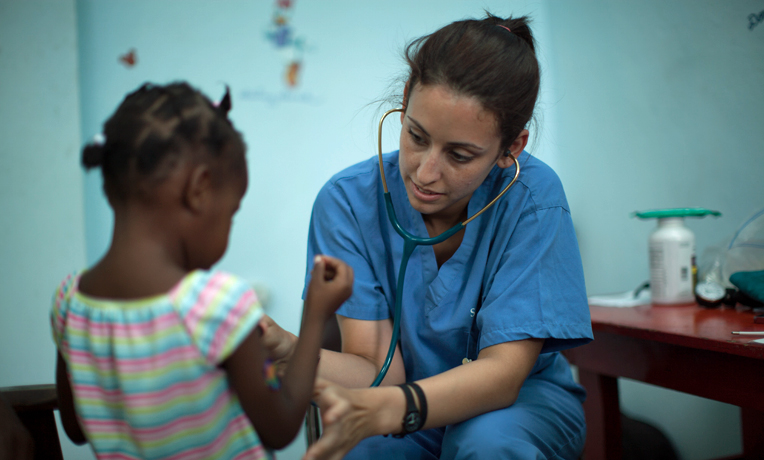
Dr. Warren Cooper is one of just a few doctors at the hospital. He lives a short walk down a hill from it, allowing him to easily return to patients after dinner if needed.
“I felt like God was saying, ‘This is happening, and you can be on board with it or not,’” Warren said. “And so for me it was a privilege to put my hand to the work and to work along with the Congolese who are working here, with the doctors who have come back at great sacrifice.”
Warren is able to provide top-level medical care and teach Congolese doctors. Samaritan’s Purse provides supplies to the hospital that aren’t readily available.
“It’s been my privilege to see Congo in a different way and to see what God is doing here in Congo,” he said. “I see good things happening here in Congo, especially working in this hospital to see people being treated for disease and sickness and to see that God is renovating this hospital has been something really good that is happening here in Congo.”

Dr. Warren Cooper spends his days performing surgeries that range from amputations to operating on machete wounds.
Warren’s wife, Lindsey, works at the hospital part-time as a pediatrician. About 50 percent of children living in the Nyankunde area suffer from malnutrition. Because of the attack in 2002, the land hadn’t been farmed in three years when people returned. This created a cycle of hunger—when people got seeds or food, they ate it immediately rather than planting. Although some have tried to start gardens, it’s been a slow process. Many households lack one or both parents, and people mostly eat cassava—a plant lacking enough calories and protein to stay healthy.
By the time the children get to the hospital, they often don’t have an appetite, making the process of returning them to health a slow one. An average child will spend four weeks in the hospital receiving therapeutic milk, but sometimes the stay is up to four months.

Drs. Warren and Lindsey Cooper with their son Emmanuel.
“Lack of good nutrition leads to disease,” Lindsey said. “We see a lot of tuberculosis here, we see a lot of pneumonia, we see a lot of gastrointestinal disease—parasites. If you don’t have good nutrition, your body doesn’t have good immunity toward diseases like pertussis, so you fall into advanced disease states that your body wouldn’t normally fall into.”
But the program doesn’t just end at the hospital. Once Lindsey’s patients are nursed back to health, Samaritan’s Purse staff members follow up with them in their homes. They invite them to take part in community gardens and teach them how to continue keeping their children healthy. They hold events in their communities to help other mothers avoid malnourished babies.
“Now it’s a place of life again and a place of hope.”
There is still aftermath from the attacks. Recovery has been slow. Some buildings remain burned, their charred walls standing as a reminder of what happened. People still carry fear in their hearts. Nyankunde is a needy area, and most patients at the hospital can’t pay the totality of their bills.

Samaritan’s Purse continues to build back portions of the destroyed hospital. Currently, we are working on a maternity ward.
But the return of the hospital has started to change the way Nyankunde is viewed. People come from hundreds of miles away for treatment. Warren said that treating people’s physical needs is a way to share Christ’s love with them.
“The reputation is no longer a place of death, which that is truly what people would hear the name Nyankunde and think,” Donna said. “Now it’s a place of life again and a place of hope.”